
Businesses are constantly encouraged to upgrade to the latest systems and hardware.
Do they need to?
The answer is no.
For many industries, replacing legacy equipment is not always practical or cost-effective. This is where obsolete board repairs play a critical role. Rather than discarding older systems, companies are increasingly turning to specialist repair services to extend the life of their existing equipment and maintain operational continuity.
PCB’s
Obsolete board repairs refer to the restoration and refurbishment of printed circuit boards (PCBs) that are no longer manufactured or supported by original equipment manufacturers (OEMs). These boards are often found in essential machinery across sectors such as manufacturing, energy, transportation, and automation. When they fail, sourcing a direct replacement can be difficult – or even impossible – making a repair the most viable option.
One of the key drivers behind the growing demand for obsolete board repairs is cost efficiency. Replacing an entire system due to a single faulty PCB can be extremely expensive, not to mention disruptive. Repairing the board, on the other hand, is typically far more affordable and significantly reduces downtime. Businesses can continue operating with minimal interruption, which is crucial in environments where every minute of downtime translates into lost revenue. This is where Greasley Electronics come in.
Sustainability
Another major factor is sustainability. Electronic waste is a growing global concern, and extending the lifespan of existing components helps reduce the environmental impact. By investing in obsolete board repairs, companies contribute to a circular economy, minimising waste and reducing the need for new manufacturing.
In addition to general PCB repair, there is a strong demand for specialised services such as andover controller repairs. Andover controllers have long been used in building management systems, particularly for HVAC and energy control. While reliable, many of these controllers are now considered obsolete, and replacement parts are scarce. Repairing these units allows facilities to maintain their existing infrastructure without the need for a complete system overhaul.
Similarly, Schneider obsolete pcb repairs are becoming increasingly important. Schneider Electric has produced a wide range of industrial control equipment over the years, much of which remains in operation today. As these systems age, failures become more common, and sourcing new boards is often not an option. Skilled technicians can diagnose faults at the component level, replacing damaged parts and restoring full functionality to the PCB.
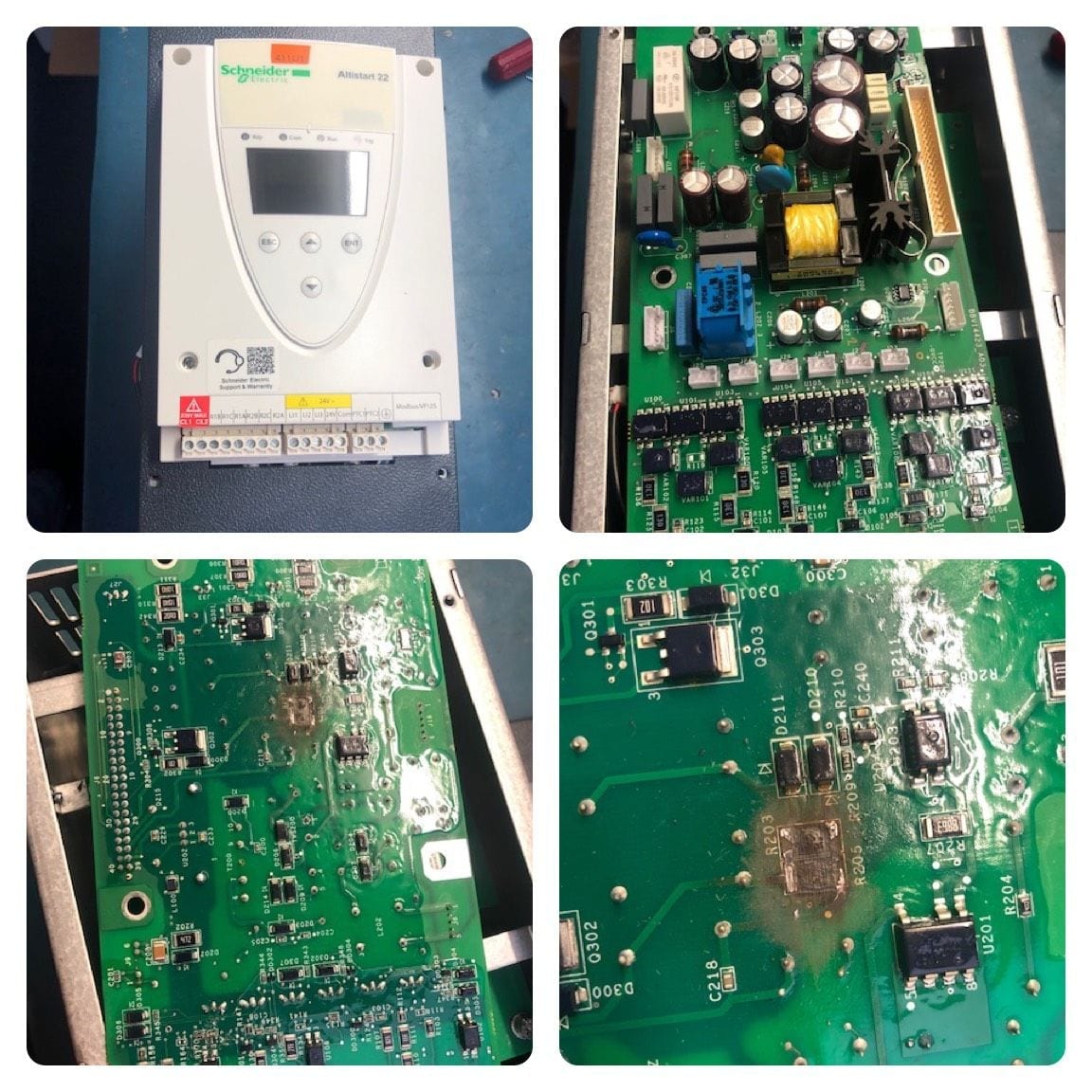
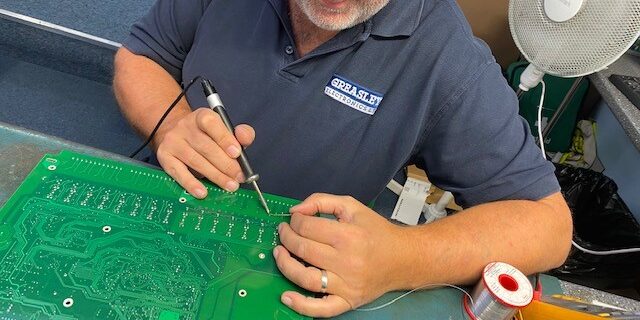
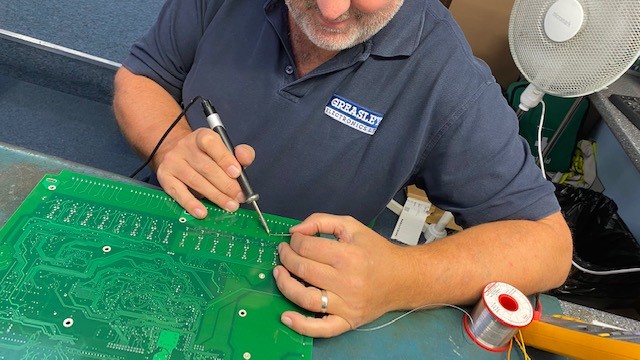
The process of repairing obsolete boards is highly specialised and requires advanced diagnostic tools and expertise. Technicians at Greasley Electronics typically begin with a thorough inspection to identify visible damage such as burnt components, cracked solder joints, or corrosion. From there, they use testing equipment to trace faults and determine the root cause of the issue. Repairs may involve replacing individual components, reworking solder connections, or even reverse-engineering sections of the board if schematics are unavailable.
Challenges
One of the challenges in obsolete board repairs is the availability of replacement components. Since the boards themselves are no longer in production, some of the parts used in them may also be discontinued. Experienced repair providers often maintain extensive inventories of legacy components or have access to global sourcing networks to locate rare parts. In some cases, modern equivalents can be used as substitutes, provided they meet the necessary specifications.
Quality assurance is another critical aspect of the repair process. Reputable repair services will thoroughly test each board after repair to ensure it performs reliably under real-world conditions. This often includes functional testing, stress testing, and sometimes even simulation within the original system environment. Many providers also offer warranties on their repairs, giving businesses added confidence in the longevity of the solution.
Despite the advantages, some companies remain hesitant to invest in repairs, often due to misconceptions about reliability. However, when carried out by skilled professionals, obsolete board repairs can be just as dependable as new replacements – if not more so. In fact, repaired boards often benefit from upgraded components and improved soldering techniques, enhancing their durability.
Looking ahead, the importance of obsolete board repairs is only expected to grow. As industries continue to rely on long-life equipment and face increasing pressure to reduce costs and environmental impact, repair and refurbishment will remain a vital strategy. Services like andover controller repairs and Schneider obsolete pcb repairs will continue to support businesses in maintaining their legacy systems while avoiding unnecessary capital expenditure.
In conclusion, obsolete board repairs are not just a stopgap solution – they are a smart, sustainable, and cost-effective approach to managing aging electronic systems. By embracing repair over replacement, businesses can extend the life of their equipment, reduce waste, and maintain operational efficiencies.
If you need any further information please contact us on 01530 835823 or click onto our website and press ‘enquire now’.